
Ndlambe Municipality’s proposed electricity tariffs have faced widespread criticism for being misdirected and heavy handed. To suggest a more effective approach, let’s examine the tariff structure implemented by the George Municipality. The images below are all directly from the George Municipality’s 2024/25 Tariff Book.
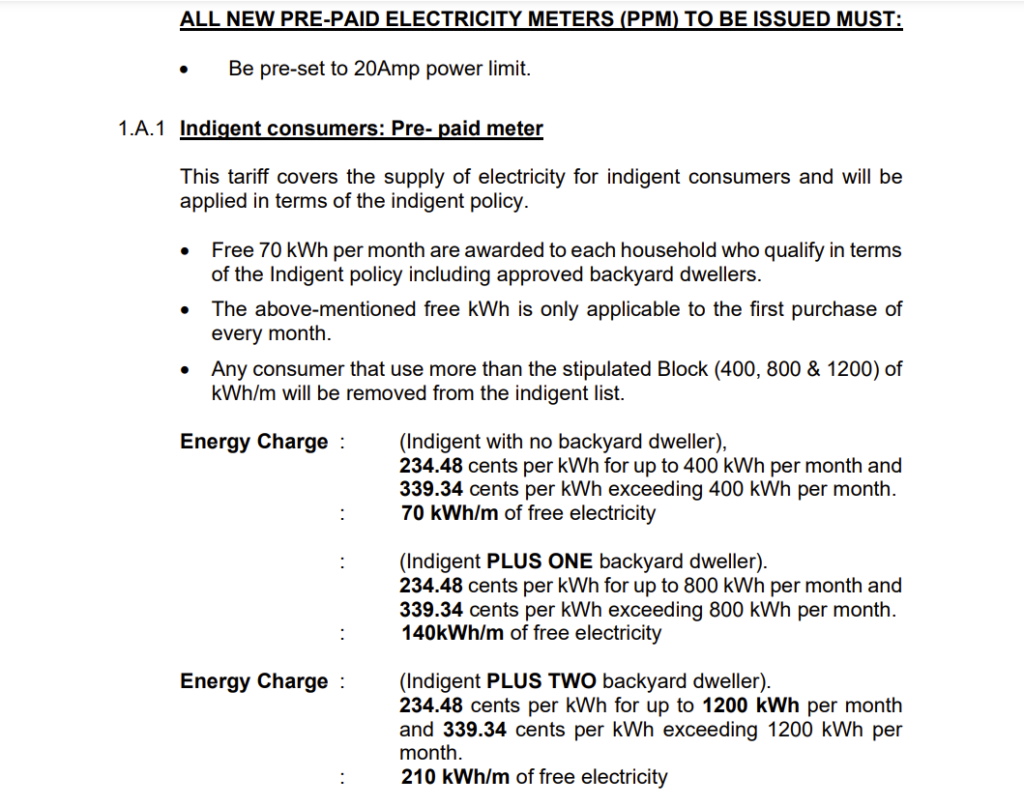
For indigent households, George Municipality offers a fixed 20 Amp capacity and a low energy charge up to a specific usage limit. The first 70 kWh per month is free. However, exceeding this limit results in a higher rate and removal from the indigent tariff category. Indigent households must use prepaid meters.
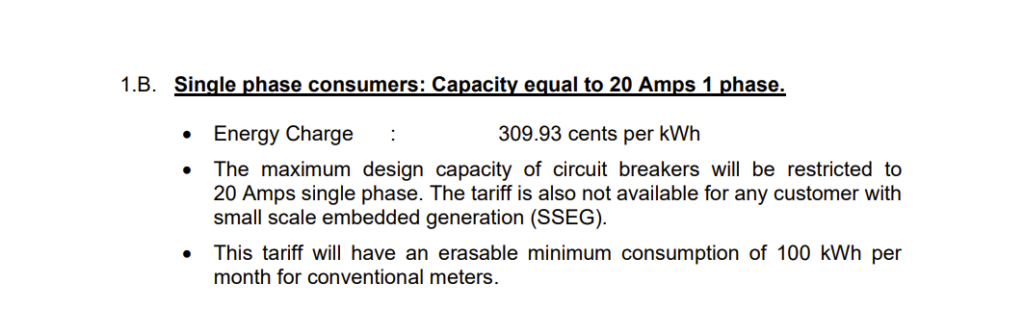
For general 20 Amp capacity consumers, George Municipality charges a flat rate for electricity usage with no consumption limit. Prepaid meters are recommended for these customers.
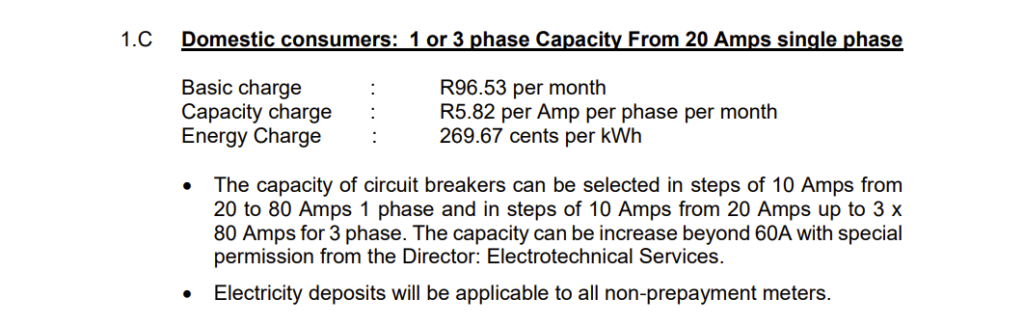
For general domestic consumers with a 30 – 60 Amp capacity, George Municipality applies fixed basic and capacity charges. A flat energy charge is also levied.
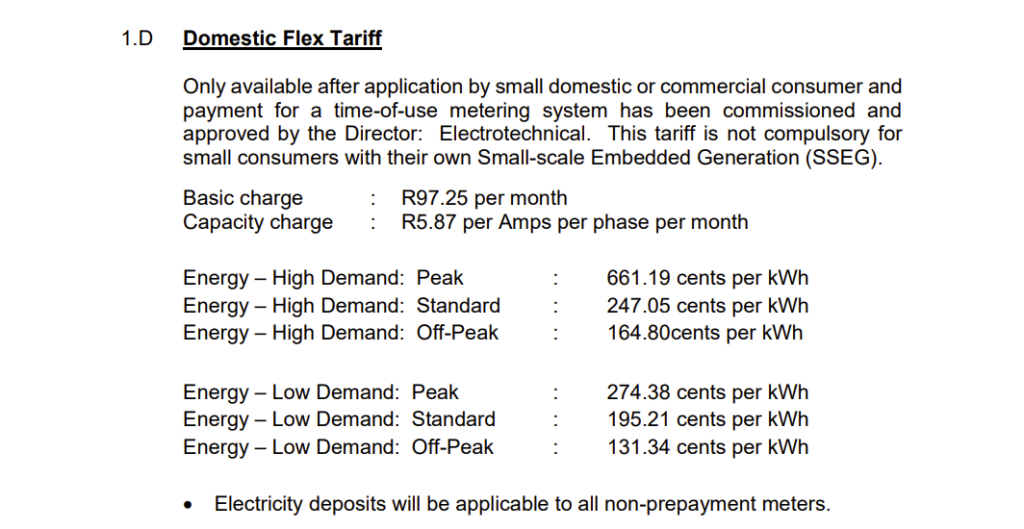
For general consumers, a time-of-use (TOU) tariff is available. Customers can choose this option, but it requires a time-of-use meter installation at their own cost. Basic, capacity, and TOU energy charges apply. However, this tariff is not mandatory for customers with solar energy systems (SSEG).
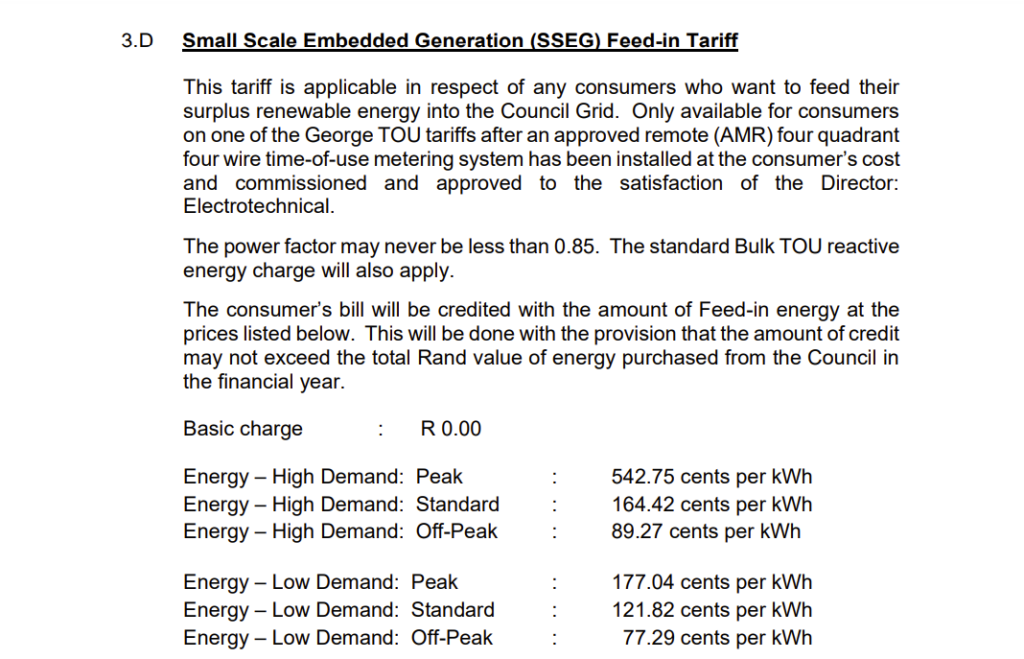
SSEG owners who want to feed-in electricity, must choose the general TOU tariff. There are no extra fees, and energy fed back is credited at TOU feed-in rates set to provide a small profit margin for the municipality.
Key advantages of the proposed tariff structure include:
- A clear definition of indigent customers.
- The option of a time-of-use (TOU) tariff
- Recognition that SSEG customers who don’t feed-in electricity don’t need to use TOU tariffs.
- Acknowledgment that some SSEG customers may choose to feed-in electricity and will need to use a TOU plan and receive feed-in tariffs.
Leave a Reply