
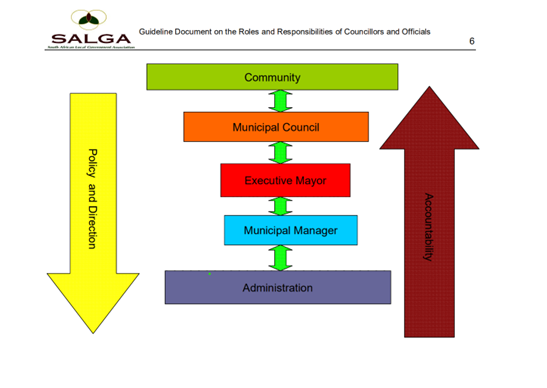
To ensure effective accountability and oversight, there must be a clear separation of powers between the municipality’s legislative body (council, mayor, executive committee) and its administrative functions. Overlapping or duplicating responsibilities can weaken oversight mechanisms.
Roles and Responsibilities:
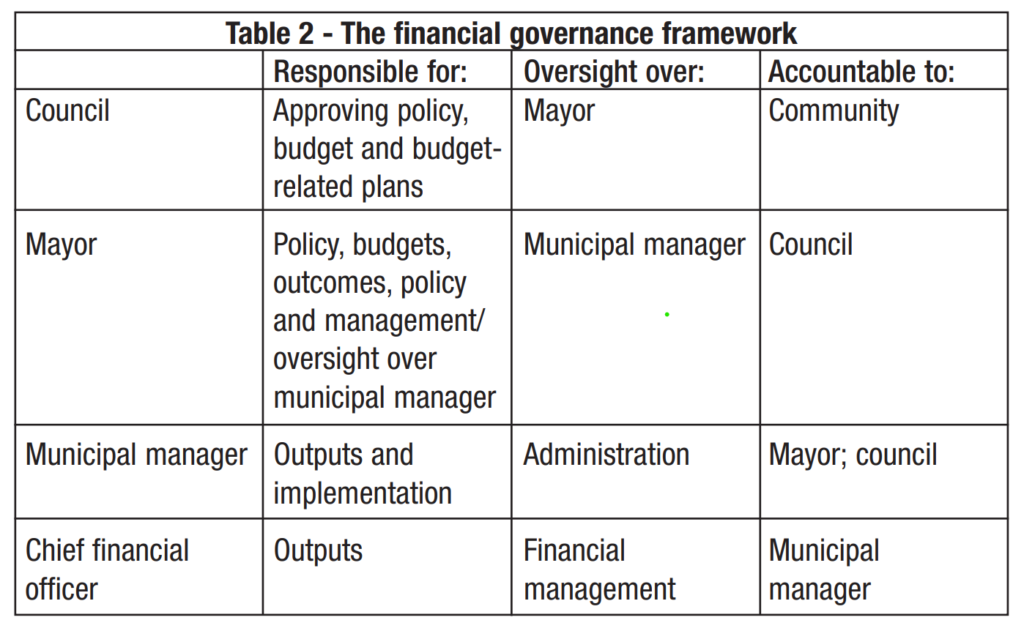
- Legislative Body (Council):
- Approves policies.
- Exercises oversight over the mayor.
- Holds the mayor accountable for promised outcomes.
- Executive Mayor or Committee:
- Provides political leadership.
- Proposes policies.
- Oversees implementation by the municipal manager.
- Municipal Manager:
- Coordinates administrative resources.
- Implements policies.
- Is accountable to the council for outputs.
- Is responsible for producing agreed-upon outputs.
- Municipal Officials:
- Implement policies.
- Provide advice to the executive mayor or committee.
The key relationships and responsibilities are shown in the figure and table below.
Conclusion:
By maintaining a clear separation of powers and ensuring that each entity fulfills its specific responsibilities, municipalities can enhance accountability, oversight, and ultimately, the effective delivery of services to their communities.
Ratepayers who understand how municipalities function can be more strategic in how they interface with government.


Leave a Reply